When Leverage Becomes a Liability: Rethinking Debt Before It Redefines Your Strategy
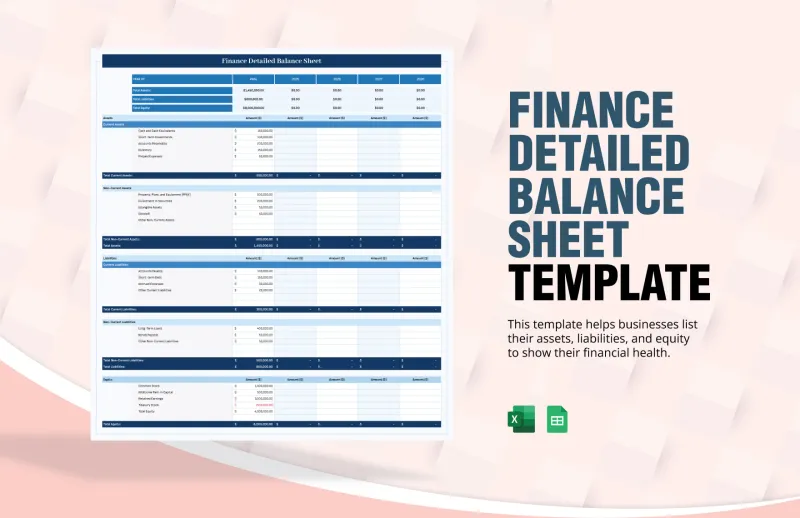
Photo: corporate finance debt analysis balance sheet executive meeting, via images.template.net
There is nothing inherently wrong with debt. Used with discipline, leverage accelerates growth, funds acquisitions, and enables companies to pursue opportunities that equity alone could not support on a competitive timeline. The problem is not borrowing. The problem is what happens when borrowing becomes habitual, when the original strategic rationale fades, and when the capital structure that was meant to serve the business begins instead to shape it — quietly, and not always in directions leadership intended.
This is a conversation that does not happen often enough in US mid-market boardrooms. The decision to raise debt is typically scrutinized carefully. The ongoing evaluation of whether that debt continues to serve its intended purpose is far less rigorous. And in the gap between those two moments, leverage can shift from a lever to a constraint.
The Seduction of Available Capital
When credit markets are accommodating and interest rates are manageable, the cost of debt feels abstract. The capital is real and immediate; the long-term implications feel distant. This asymmetry encourages a bias toward borrowing that is difficult to recognize in the moment.
Mid-market companies — particularly those backed by private equity or in the midst of a growth phase — are especially susceptible to this dynamic. The pressure to deploy capital, demonstrate velocity, and hit near-term EBITDA targets can make additional leverage feel not just acceptable but strategically necessary. And in many cases, it genuinely is. The issue arises when the metrics used to justify the initial borrowing decision are not revisited as circumstances evolve.
A company that raised debt to fund a specific acquisition may find, two years later, that the debt service obligations are constraining its ability to invest in organic growth. The original rationale was sound. But the capital structure has now taken on a life of its own, influencing decisions that have nothing to do with the original transaction.
Three Warning Signs That Debt Has Become a Constraint
Not all leverage-related risk is visible in a credit agreement or a balance sheet ratio. Some of the most consequential signs that debt has transitioned from tool to trap are behavioral and strategic, not purely financial.
1. Debt service is influencing investment prioritization. When leadership teams find themselves deferring organic investments — talent, technology, market development — because cash flow must first satisfy debt obligations, the capital structure is effectively setting the strategic agenda. This is not always catastrophic, but it is worth naming explicitly. If the answer to "why aren't we investing in this opportunity?" is consistently "because of the debt," that is a signal worth taking seriously.
2. Refinancing anxiety is shaping operating decisions. Companies approaching a debt maturity wall sometimes begin making operational decisions designed to improve their refinancing position rather than to advance their long-term strategy. Margin management, asset sales, and headcount reductions that are timed to credit events rather than business fundamentals are classic symptoms of a capital structure that has inverted the relationship between finance and strategy.
3. Covenant compliance has become a management priority. Financial covenants exist for legitimate reasons, and monitoring them is responsible treasury management. But when covenant headroom becomes a primary input into operating decisions — rather than an output of sound strategic execution — the business is, in a meaningful sense, being managed for the lender rather than for the shareholder.
A Practical Scorecard for Mid-Market Leaders
Evaluating whether your current capital structure is genuinely serving your growth ambitions requires more than reviewing leverage ratios in isolation. The following scorecard is designed to prompt a more complete conversation among CFOs, CEOs, and boards.
Optionality Test: If a compelling acquisition target or market opportunity emerged tomorrow, would your current debt load allow you to act on it? If the honest answer is no — or not without significant restructuring — your leverage may already be limiting your strategic range.
Flexibility Test: Does your debt structure include covenants, restrictions, or amortization schedules that would require lender approval or renegotiation before you could pursue a major strategic initiative? Flexibility is a form of value, and it has a cost when it is absent.
Alignment Test: Was the debt raised to fund a specific purpose, and is that purpose still the primary driver of value creation in the business? If the strategic rationale for the original borrowing has evolved significantly, the capital structure may deserve a fresh look.
Cost of Inaction Test: What is the opportunity cost of maintaining the current debt profile versus restructuring? This requires modeling future scenarios rather than simply reviewing current ratios — a discipline that is often underinvested in mid-market finance functions.
Discipline as a Competitive Advantage
The companies that navigate capital structure most effectively are not necessarily those with the lowest leverage. They are the ones that maintain an ongoing, rigorous dialogue between their strategic planning and their financial structure — treating the two as interdependent rather than sequential.
That discipline requires a CFO who is empowered to raise uncomfortable questions about debt service implications before a deal closes, not after. It requires a board that evaluates capital structure through the lens of future optionality, not just current compliance. And it requires a CEO who understands that the balance sheet is not just a financing tool — it is a strategic document.
At Fedafi Advisory, we work with mid-market executives to stress-test capital structures against forward-looking growth scenarios, identify inflection points before they become constraints, and build the analytical frameworks that keep financial structure in service of strategy — rather than the other way around.
The debt trap is rarely sprung all at once. It tightens gradually, through a series of individually reasonable decisions that collectively reduce the room to maneuver. Recognizing that dynamic early — and responding with deliberate clarity — is among the most consequential things a leadership team can do to protect its future strategic freedom.